
The dreaded summer bollette have arrived. I just got my electricity bill for June and July, two full months of back-to-back prolonged heatwaves. I spent a lot of those days stuck indoors, trying to limit our air conditioner use to the minimum needed to keep things bearable in our Florence apartment. The bill was even more eye-watering than expected after energy companies hiked their prices in July.
Like most people I know in Italy, until just a few years ago I didn’t have AC at home. The heat was a bit uncomfortable for a few weeks in summer, but we managed with fans and cold showers. There was no reason to go to the trouble of installing it.
We live in an old building with thick stone walls and heavy wooden shutters designed to keep the worst of the heat out. Unfortunately, that's no longer enough.
Using the AC feels increasingly necessary, and not just because it's so hard to sleep on those "tropical nights". I have a young child and without it the indoor temperature quickly gets well above what's considered safe for under-5s. The health risks posed by intense heat are frightening. Elderly people are most at risk of serious complications arising from dehydration and heatstroke, though hospital admissions for young children also spike during heatwaves.
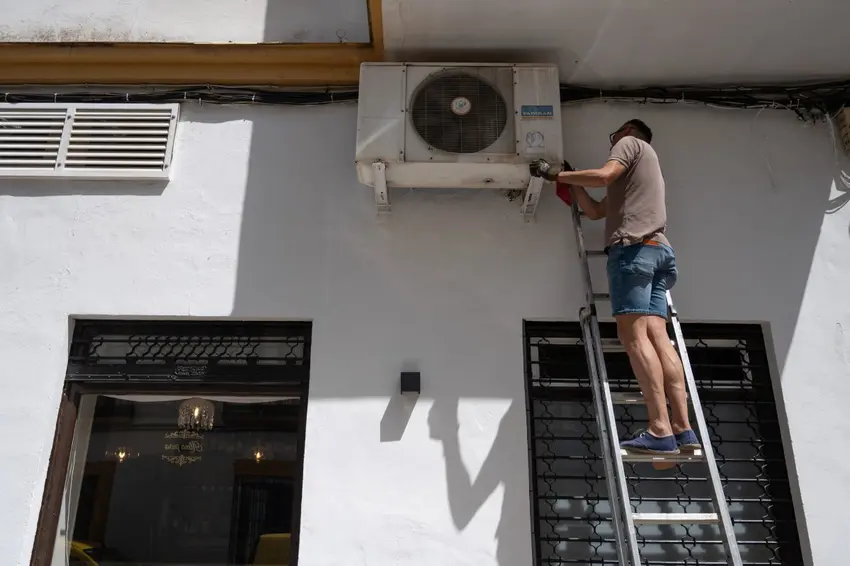
As summers get hotter, Italians are embracing air conditioning after decades of viewing it as a luxury, or something to be suspicious of.
Installation rates are rising sharply, up by around 30 percent year on year. Most people still say it costs far too much. State subsidies can help with the installation, but not with the resulting bills.
The fear of the colpo d’aria (that a sudden draft will give you anything from a stiff neck to pneumonia) was another factor often blamed for the widespread lack of AC here. But now even the (usually older) people convinced that AC is bad for your health are increasingly persuaded that it's better than heatstroke.
READ ALSO: Why Europe is the world’s fastest warming continent
Like our apartment building, the public buildings and services we all rely on were also designed for a milder climate that no longer exists.
Nine in ten Italian schools lack air conditioning, simply because they didn’t need it before - the serious heat didn’t arrive until late June, by which time the kids were on holiday. Now, it arrives in May. Anywhere you can’t avoid queuing for hours, from the questura to the post office or hospital waiting rooms, the cooling is usually limited or absent.
Public transport is another example, with rail and metro carriages that routinely reach temperatures that would count as a workplace safety risk. Public transport operators admit this is because these vehicles were designed with the old climate in mind.
Despite all of this, the topic of air conditioning use is hardly politicised here at all.
In France there’s a serious argument going on about whether widespread domestic AC use should be encouraged, as it accelerates the very warming it’s meant to relieve. The Local France's editor has explained in detail her reasons for going without, even in Paris, a city which seems designed to get as hot as possible.
There, the far right has claimed air conditioning as its own, with Marine Le Pen presenting its widespread installation as the easy solution that fixes everything. The issue is politically charged and deeply polarised. Not unlike in the US, where I've been perplexed to read articles in which the setting on someone's thermostat is used as shorthand for their political viewpoint.
I am relieved that, in Italy, no one is trying to shame anyone into switching the AC off, or insisting that not using it makes you a communist. And there's no space left for denial - the few voices still suggesting that this year's was just normal summer weather come from outside of Italy.
Still, the total lack of any real political debate is another problem.
The environment minister gestured this month at actually implementing part of Italy's plan for climate adaptation, though we won't know for a while if there will be any budget for that, never mind whether the plan will make a difference. Things aren't hopeful - this government's track record has been of ignoring climate issues almost entirely.
READ ALSO: Five of the big challenges facing Italy this September
Meanwhile Europe's energy companies continue raising prices and posting record profits, and politicians in Italy as elsewhere are still afraid to do anything about it.
Six EU finance ministries including Italy’s last week pushed for a windfall tax on the energy sector to help offset the cost for households struggling to cope, an idea that Deputy Prime Minister Antonio Tajani rejected and said "smacks of the Soviet Union".
He didn’t say what letting people die of heat-related illness smacks of. Italy had the highest heat mortality rate in Europe for three summers running, but has yet to count its "excess" deaths from this one. The known death toll across Europe has passed 30,000.
The Italian government has not suggested it will provide any financial help with summer energy bills along the same lines as the winter fuel payment, available to those on very low incomes.
It is instead focused on a plan to bring back unpopular nuclear power, which it hails as the solution to keeping energy prices down; if that happens it won't be for at least a few more years. For now, the dangers of intense heat are mainly being left to city and regional councils to manage via a patchwork of local measures.
For most people though, the conversation on this topic is not around whether they should install air conditioning, or whether using it is right or wrong, but how they're going to pay for it and whether the heat is now the final straw making Italy's cities unlivable.
Comments